Showing posts with label Reviews. Show all posts

Friday, August 20, 2010

Pattern Review - Burda 08-2010 112 Top

Found the picture, thanks to Katia and absolutely NO thanks to Burda

Pattern Description: This pattern is for a double-layer top. The under layer is offset about 45° at the sides, creating a cool bubble effect.

Sizing: 34-44. I used a 40, though next time I'll go down to a 38 and do a FBA.

Fabric Used: For the underlayer, a (sold out) paisley jersey. For the upper layer, Rayon Jersey in Amethyst. Both fabrics are from Gorgeous Fabrics, of course.

Needle/Notions Used: Stretch 70/11. Polyester cone thread. That's all.

Did it look like the photo or drawing when you got through? Yes.

How were the instructions? Burda typical. I actually didn't like the way they have you put together the shirt. They tell you to sew the shoulders and bind the necklines of each of the separate tops. The underlayer top is sleeveless. They have you attach the underlayer to the upper layer at the hem, and leave the rest of the top free-floating. To me, that didn't make sense. So I did my own thing. I'll show you below.

Construction Notes: Here's how I put the tops together.

1 - Sew shoulder seams and bind the neckline for the underlayer top. Sew the side seams. Repeat this process for the upper layer top. Do NOT sew the sleeves yet. So you end up with two sleeveless tops:


2 - Put your underlayer top inside your upper layer, with the Wrong Side of the underlayer facing the Right Side of the upper layer. Sew the two layers together at the hem. Here you can see the two layers and where they are attached at the hem.

3 - Pull the underlayer through so the Right Side of the underlayer faces the Wrong side of the upper layer. Match the shoulder and side seams on both tops. Baste both layers together at the armhole.

4 - Attach sleeve to basted garment layers. Ta daaa! Easier and (to me anyway) more logical way to construct it. Plus, this way you don't have to futz with the shoulder seams and such when you put it on.

Any design changes? Only very slight. The original pattern calls for sleeves that are roughly 4 inches longer than the average arm. I didn't have enough fabric and I was too lazy to go cut more, so I just made them wrist length. Other than that, nope.

But if I make this again, I'd probably cut the underlayer about a half-inch shorter than the upper layer, to eliminate any possibility of the underlayer peeking out at the hem.

Likes/Dislikes: This is cute and will be a great top for fall into winter. For my dislikes, see This Post Here.

Would you do it again? Would you recommend it? I might do it again. I don't know if I need more than one of this top. But I do recommend it, if you can get past the damned pattern sheet in the magazine. It's cute and it's comfortable. And it will look fantastic on me with a pair of jeggings! ;-)

Conclusion: Cute cute cute! Here's the finished product on Shelley:

Oh, you know, this picture reminds me. This top is quite long. I'm 5'6" with a pretty average length torso. I think if I do make it again, I'll take about 2 inches or more of length off. You might want to check the length on you before you sew it up.

Parting Shot: Pincushion
My friends Bill and Ed, who own The Farmhouse Store in Westfield, NJ gave me this lovely little Nantucket Basket Pincushion when we met for dinner in New York. How fabulous is this???
You may remember them for another lovely gift they sent me - my Chemo Bling Ring. They are such dear people, and they have such gorgeous things in store (and I know from Gorgeous Things). If you are in the area, do stop in and tell them I sent you!

Happy sewing!

Tuesday, August 17, 2010

Notion Review - Bienfang Canary Sketching and Tracing Paper


What it is: This is a lightweight tracing paper in a soft canary yellow. I bought this when Charette was having their going-out-of-business sale (sniff!). I wanted white tracing paper, which I had bought there on many occasions, but they were already sold out. It turned out to be a happy circumstance. I opened this up today for the first time when I was tracing off the damned Burda pattern.

What did you think of it? Love. It! Seriously. This is much better than the other tracing papers I used. It's about halfway between the weight of standard pattern tissue and the white tracing paper that I always bought. I can see the Burda lines much easier. So on a more sane pattern, this will be a joy. I can't wait to use it on a Jalie or HotPatterns.

Worth it? Yes, definitely.

Where did you get it? As I say, I got my rolls (I buy my tracing paper in 100 yard rolls in different widths) from the late, lamented Charette. But you can get it at most art supply stores.

I'll post a picture of my traced pattern over the damned pattern sheet tomorrow, so you can see why I like it.

Happy sewing!

Monday, August 09, 2010

Pattern Review - Hotpatterns Marrakesh Pants


Pattern Description: From Hotpatterns' Website - "Fabulously relaxed glamour in these stunning pants, designed for a drapey pants-weight fabric...try a fluid washed linen, heavy rayon blends, single or double knits or heavy crepe. Relaxed-fit straight leg pants sit around 1” below the natural waist and feature a drawstring waist with fly front zipper. Side seam pockets are topstitched down. Pants finish with a deep hem; optional buttoned tab allows the pants to also be worn rolled up. These are the perfect relaxed Pants and an essential addition to your HotPatterns wardrobe... relaxed at the waist but sleek over the tummy, hips and derriere. Make them in crepe and wear with a sequined tank for a modern night-time look; try them in a slouchy, fluid linen with a drapey knit top and soft jacket for everyday chic, or wear them in a stable cashmere knit with a matching Tshirt for superior lounging gear."

Sizing: 6-24. I made a 10

Fabric Used: Italian Stretch Linen in a deep olivey green, from Gorgeous Fabrics, natch.

For the waistband and pocket linings I used a cotton batik from Androsia in the Bahamas that I found hiding in my stash. It's at least 6 years old, probably 7 or 8. It has a lovely conch shell motif on it.

Needle/Notions Used: Stretch 11/75 needle, a couple of scraps of woven fusible interfacing, 5/8" elastic, one snap, a 7 inch zipper, Gutterman thread.

Did it look like the photo or drawing when you got through? Yes

How were the instructions? Meh. They aren't terrible, but I wasn't really thrilled with them. There are mistakes that should be fixed. Things like telling you to cut strips of interfacing for the fronts where the zipper will be placed. The instructions tell you to cut them 9 inches by 1 inch. In fact, the zipper closure for size 10 is 6 1/2 inches. So if you follow the instructions, you'll have interfacing extending into the body of the garment.

Also, the instructions tell you to cut a piece of elastic 1/3 the measurement of your waist. In my case, that was too long. I took 5 inches off the elastic. That worked much better.

Construction Notes: First, if you are taller than 5'6", you will want to add length to the legs. I'm 5'6" and to get the length I want for these pants, I used a 1 inch hem. If you're tall, be prepared to add on to the legs.

I cheated on the waistband. I'll admit it. I copied a pair of Loft pants that I have and just sewed both raw edges of the waistband to the raw edge of the pants. Then I finished the edges with a three-thread overlock. I tacked down the SA's at the side and back seams, and at the front. Hey, it works!

I also decided to have a little fun with the seam finishes, and I used bright red thread in my overlocker.
 Nail polish color: Fiercely Fiona by OPI

Likes/Dislikes: I like the style of these pants. I like the fact that they go together easily. I like the way they look on me.

Now for the dislikes. Okay, first let me say that these pants turned out really well. So, none of the issues I'm about to discuss are dealbreakers. All of the following are what I call "broken shoelaces" - little things that are minor irritants.

First, I'm not satisfied with the placement of the buttonholes for the drawstrings. They are (IMO) too close to the center front. Do yourself a favor and do a quick mockup of the waistline and determine where you want the openings. I think you will want to move them.

Second, the pockets are one size fits all. That's fine for sizes above 10. But if you are making a 10, 8 or 6, the topstitching for the pockets and the topstitching for the fly front will intersect and/or conflict with each other. I ended up topstitching a second time over the fly, ending at the curve of the fly-front. Then I turned the garment over and, working from the back side, I stitched the rest of the way around the pocket. You can see a picture here:
If you look about halfway down the pocket, you'll see where I stopped the stitching on the front and picked it up again from the back. This works because I was using matching thread. If you want to use contrast thread, you will need to work out your construction steps differently.

There were also a few other really minor things that I wish were different. For instance, there are next to no notches on this pattern. There are notches at the bottom of the pant legs, and there is a double notch at the back seam. That works fine for me. But I could see the usefulness of having notches or markings at the bottom of the pockets. Also, there is no marking, at least on the pattern that I have, for the button/buttonhole placement at the top of the zipper. Deal breaker? No. But the pattern is listed as being appropriate for advanced beginners, so I think it would be nice to have these things laid out explicitly.

Would you do it again? Would you recommend it? I may do it again. I would recommend it for confident sewers. It's not difficult, and it does produce a great result.

Conclusion: Here's a picture on Shelley

Sunday, July 25, 2010

Pattern Review - McCalls 6074 1 Hour Dress


It's hot here, so I wanted to make a little dress to wear and stay cool. I wanted to make it before I left on vacation, but alas, life got in the way so I made it today instead.

Pattern Description: From McCalls Website, MISSES' DRESSES IN THREE LENGTHS: Pullover dresses A, B, C, D have front elastic casing detail, deep V-neck, flare skirt and stitch hems; dress A has purchased iron-on trim; dress B has contrast hem band; dress D has cap sleeve; dresses A, B lengths are 2" above mid-knee; dress C is evening length; dress D length is 2" above ankle.
I made View A, sans the crafty shit purchased iron-on trim.

Sizing: 6-22, I made a 12.

Fabric Used: Über Soft Italian Rayon Jersey in Soft Red.

Needle/Notions Used: Stretch 75/11, a couple of scraps of fusible interfacing, 1 inch petersham ribbon, 5/8 inch elastic, Metrosene thread.

Did it look like the photo or drawing when you got through? Yes.

How were the instructions? I didn't use them. I took a quick look at them and they seemed fine.

Construction Notes: I serged all the seams and ran the neck and armhole hems on my regular machine. I used a 3-thread serger stitch for the bottom hem:

I reinforced the back shoulder seams with fusible interfacing before I sewed them. I used a length of 1 inch cotton/rayon petersham ribbon (purchased from Susan Khalje) instead of the casing piece in the pattern. I think it works just as well and looks nicer. The petersham doesn't add any appreciable bulk.

It's worth noting that this pattern runs a little large, especially if you use a jersey with a lot of give like I did. I made a size 12, but I think I could even have gotten away with a size 10 with a FBA.

Any changes? The bust point on this pattern is pretty high, so I lowered it. I also lowered the placement of the elastic/casing by about an inch to sit nicely under my bust. I did a FBA.

Likes/Dislikes: Easy, fast to make and comfortable to wear. I do have one teeny little quibble. They call it a "One Hour Dress" on the pattern envelope. I'd say it's more like two or three hours, but it's still an easy sew.

Would you do it again? Would you recommend it? Yes and yes. A cute dress that is comfortable and easy. What's not to love? Here's a picture of the dress on Shelley

Parting Shot: Anniversary Dinner!
Everyone loves the Pink Wig.

Happy sewing!

Tuesday, June 29, 2010

Pattern Review - Vogue 8658 Dress, and a Big Sale


Pattern Description: "MISSES' TUNIC, DRESS AND PANTS: Tunic A, dress B have front and back darts, shaped hem and shaped neckline finished with fold-over braid. A: three-quarter length sleeves with fold-over braid finishing. B: armholes finished with fold-over braid. Length is 1" above mid-knee. Pants C are pull-on with straight legs and elastic waistline casing. Length is below mid-calf. Separate pattern pieces provided for A, B, C, D cup sizes." I made View B, the dress.

Sizing: 6-22. I made a 14

Fabric Used: An absolutely gorgeous cotton that my friend Flora brought back from Italy for me two years ago. For the trim I used Italian Twill Cotton Voile in White from Gorgeous Fabrics (of course).

Needle/Notions Used: Universal 70/10. Gutterman thread.

Did it look like the photo or drawing when you got through? Yes

How were the instructions? I lost them, so I have no idea, sorry.

Construction Notes: Vogue recommends using foldover braid for the trim. I decided instead to make bias binding, thinking it would work better, which it did. I had originally decided to use the Basketweave Cotton as the trim, thinking the texture would work nicely with the print on the main fabric. But the Italian cotton is very light, and when I sewed the basketweave to it, it really weighed down the neckline. So I pulled it off and used the voile instead.

Speaking of the neckline, it is noticeably different from the photo on the website:
The actual neckline comes in much closer to the center front at the base of the throat. The line drawings give a more accurate representation. Also, the curvature of the neckline keyhole is pretty sharp (Sharp curves- isn't that an oxymoron?), so your trim may have a tendency to buckle. Depending on the trim you use, you may want to redraw the neckline so the curves are more gentle (like the picture above).

Any changes? The front of this dress is sized for A, B, C, and D-cups. I lowered the bust dart by one inch. Also, as drafted, the back has very little shape to it, and looks pretty sack-like. I added back waist darts, which gave it a much more pleasing silhouette.

Likes/Dislikes: LOVE the different cup sizes. It makes life so much easier. I wasn't crazy about the shape until I added the back darts. If you have any waist, make a muslin and see if you prefer to add them.

Would you do it again? Would you recommend it? I'm not sure I'd make it again, and I'd give it a qualified recommendation. I think it needs more shaping. The tunic may not need it as much.

Conclusion: A good pattern that can be even better with a little work. Here are pictures on Shelley:

Fourth of July Sale Going on Now at Gorgeous Fabrics!
If you aren't on the mailing list or a Facebook Peep, you may not be aware that we are running a humongous sale at Gorgeous Fabrics through July 5. Almost everything (except Swatches, Muslin and Gift Certificates) is on sale for 20% to 25% off our regular great prices. So what are you waiting for? There's some serious stash acquisition waiting for you!

Click Here to Shop the Sale!

Happy shopping and sewing!

Wednesday, June 09, 2010

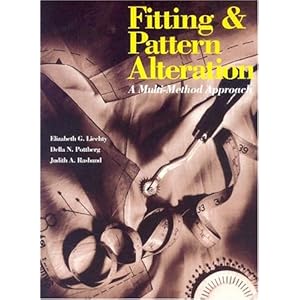
Book Review - Fitting & Pattern Alteration A Multi-method Approach

 
Image: Amazon.com

I just ordered the second edition of this book, which has some add-ons that look interesting. In the meantime, I've owned this book for 5 years and it is my first line of defense in fitting patterns and muslins. When I get the 2nd edition, I'll review the differences between the two.

Authors: Elizabeth Liechty, Della Pottberg, Judith Rasband

ISBN-10: 0870057758
ISBN-13: 978-0870057755

Book Index/Chapter headings
Part 1 - Theory
1: Using the Elements & Principles of Design
2 - Selecting and Using Equipment
3 - Evaluating the Figure
4 - Selecting Patterns
5 - Learning from the Contents of a Pattern
6 - Recognizing Correct Fit
7 - Learning to Fit a Garment
8 - Methods of Fitting
9 - Methods of Pattern Alteration
10: Personalized Patterns & Slopers

Part 2 - Illustrated Alteration Guide
Hip Area
Legs
Neck
Shoulders
Rib Cage
Arms

PaperBack or HardBound? Paperback

Does this book have clear illustrations or photographs? Yes. The book is chock full of illustrations. In the first half, the Theory section, the illustrations focus on sillhouette, line, body symmetry or asymmetry, measuring, how to recognize distortions, etc. The second half of the book uses copious line drawings to illustrate drag lines on different parts of the body and pattern alterations to address those drag lines.

On a scale of 1-10, how would you rate this book in the must-have category? 10, if fitting is your interest and you want a comprehensive book on different ways to achieve fit.

What I like about this book: There are a few things worth noting about it. It is written in the style of a college textbook. Two of the authors are instructors at BYU in Utah. But it is written in a way that makes this edition useful for home and hobby sewists. There are tons of clear drawings, showing how to make the changes necessary.This edition  concentrates on using commercial patterns, rather than a RTW alteration or pattern drafting approach.

They take a holistic approach to fit, too, talking at length about comparing your proportions to those of the pattern, and learning to look beyond the pattern drawing as a way to avoid disappointment in the final garment. How many of us have the proportions of the models or illustrations on the front of patterns? They also discuss color, silhouette, line, ease and other theory staples.

I really like the fact that this book is a "Multi-Method Approach" to pattern alteration. The authors explain how to achieve fit using three comparison fitting methods: pinned pattern, measurement and trial garment or muslin. They go on to talk about different methods for altering patterns: slash, seam and pivot. I like this approach because I have yet to find a single method that works for all pattern adjustments. This gives a good variety, and between the three methods you are likely to find something that works for you.

I also like the second section of the book. Using line drawings and detailed explanation, the authors take you step by step from identifying the causes of drag lines through the pattern alterations you should make to address them. They also take many pains to discuss the order of alterations so that you work on the major fit areas first, then work on other areas. It is a logical, well thought approach. Finally, I like the fact that they discuss over-fitting, and how many of us are tempted to eliminate too much ease in order to achieve a better fit.

One word of caution: This isn't necessarily geared to the beginning sewist. This book assumes some knowledge of construction. But it is definitely worth acquiring and you will get your money's worth from it.

Conclusion This is an excellent reference for any sewing library. It's pricey ($74 list, currently $54 at Amazon). I bought it on a whim at my local Barnes and Noble. It's become my go-to book for any fit questions. So it has been worth every penny in my opinion.

Parting Shot: Mama Turkey and Her Little Drumettes

When I came out of the gym yesterday morning, a wild turkey hen and 8 chicks were pecking about in the grass. It's a little difficult to make out, sorry - I only had my cell phone with me. But mama was digging a little hole for herself and the chicks were running underneath her to get warm. It was really cute! Pass the cranberry sauce...

Friday, June 04, 2010

Pattern Review - McCall 6069 Beach Coverup (Dress)

I feel like I've just come up for air after being under water for too long. As of today, I am half-way through my radiation treatments. I'll wait to sing alleluia until I'm completely done, but it's coming! Once I'm finished with all my treatments, DH and I are going on a much needed vacation. I've had absolutely no sewing mojo, as I told my friends over at "Recovering Members of Sewing Forums" on Facebook. But yesterday it started raising its head after I realized that I need a couple of things for vacation.

First up, I made another pair of the Larry Bird shorts. I'll post about those shortly. They're at home and I'm not. The second thing I made was a swimsuit cover up. I have two swimsuit cover ups at home. One came from Bonaire about 12 years ago and it has holes in it from being worn frequently. The second one came from Cane Bay Divers in St. Croix. It's become my favorite nightgown. So I need something new. As I contemplated the patterns for swimsuit coverups out there, I felt duly unimpressed. Then I went to Everything But Water, a specialty swimsuit store, where I saw all sorts of really cool coverups for lots and lots of money. "Hah!" said I, "I can make something that will be equally chic and won't cost me an arm and a leg." More for umbrella drinks, right? After seeing Erica B's review of this pattern, I had a lightbulb moment. This can work beautifully for a beach coverup. It's easy, it's chic, you just toss it on and go. All you need is the right fabric. So read on....


Pattern Description: From McCalls' website, "Pullover, above mid-knee, semi-fitted straight dresses A, B, C have elastic waist casing, stitched hem and bodice variations; dress A is sleeveless; dress B has three-quarter sleeves; dress C is sleeveless with self sash; dresses A, B, C have optional back strap; optional purchased belt."

I made View A, the sleeveless version

Sizing: 6-20. I made a 12, tapering out to a 14 at the waist.

Fabric Used: Gleam Me Up, Scotty mesh from Gorgeous Fabrics (of course).

Needle/Notions Used: 70/10 needle on my industrial, 75/11 on my industrial serger. Polyester cone thread. Clear elastic from Fashion Sewing Supply.

Did it look like the photo or drawing when you got through? Yes

How were the instructions? I didn't use them, and I only gave them a cursory glance. They look pretty good. This is a very simple design and it's pretty easy to figure out how to put it together.

Construction Notes: I made a FBA on the bodice front. Here you can see a picture of what I did:
Here's some explanation. If you think about the issue of fitting cloth over the bust, it's an issue of projectile (and I don't mean 50's bullet bras). Generally speaking, you need to add room around the torso at the fullest part of the bust, and also length from the shoulder seam to the waist, to accomodate the three-dimensional projection of the bust. But when dealing with a knit that's very stretchy on the cross grain, combined with 4 inches of bust ease to begin with in this pattern, you can get away with just adding length. Here, I added one inch of length directly under the bust apex, to keep the waistline from pulling up. I used a French curve to taper from the side seam to the added length. Then I kept that length at the center front. The result is that the dress' waistline falls at mine.


I also decided to forego hemming the dress, since it's really meant for kicking around between the beach, pool and bar. This mesh doesn't ravel at all, so it will hold up just fine, and I like the airier look of an unfinished hem. I may shorten it by about 6 inches so it looks more beachy and less day-dress.

Likes/Dislikes:It's cute; it's fun and it's perfect for throwing over a suit. No dislikes!

Would you do it again? Would you recommend it? Yes to both. I may make this in a rayon jersey for a dress that can go from beach to town to dinner.

Conclusion: Love it! Here are pictures of the front and back on my dress form. Sorry for the lousy picture quality. I took them on my cell phone.

Front:

and Back:

Happy sewing!

Sunday, May 16, 2010

Pattern Review - BWOF 05-2010 121A Larry Bird Shorts

It's been a long, bad week. It started with DH's car dying and it didn't get any better from there. One of our family's dear friends died yesterday after a long battle with cancer. Vale, Barry. You will be sorely missed. Another friend's daughter was just diagnosed with osteosarcoma at age 9. I started radiation, which isn't bad at all compared with chemo, but it does take time out of the middle of every day, which means I feel like I'm scrambling to keep up.

But enough of my whining. I did manage to get a very little sewing done. I made my Larry Bird Shorts. So here you go...

Pattern Description: (From the Burda website) Sporty, sexy and sewn in a snap, these shorts are a must-have! 
The waist elastic is a comfortable detail.

Sizing: 34-42. I made a 40

Fabric Used: 3 oz (sold out, sorry) Japanese denim from Gorgeous Fabrics (of course).

Needle/Notions Used: 70/10 needle. 1 1/2 inch waistline elastic from Pamela's Patterns (great stuff!). 1/2 inch nickel grommets. Black cord stops.

Did it look like the photo or drawing when you got through? Yes.

How were the instructions? Burda. 'Nuf said.

Construction Notes: This is a pretty straightforward pattern. I managed to do something a little weird to the band trim at the bottom, but it isn't bad and so I'll just call it a design enhancement and leave it be.

Any changes? After making the Bermuda/Capri length without any changes, I changed the Insane Crotch to work better for me. I changed the angle of the crotch in the back, which raised the entire thing by about an inch. I changed the front curve to match.

Also, Burda calls for 30 inches of elastic for the waistband for a size 40. That's way too much. Take at least 6 inches off that to start and see how you like the fit.

Likes/Dislikes: Cute shorts that will be comfortable for summer. These are definitely short-shorts; I'd call them one step above Daisy Dukes. So if you are more modestly inclined. I'd add a couple of inches of length to them.

Would you do it again? Would you recommend it? Yes I would do it again. The pattern calls for lightweight woven fabrics, but I think this would work really well in a mid-to-heavy knit fabric as well. I may try making that next. These only take about an hour to sew from start to finish. Would I recommend it? Well... maybe. You saw that I had to do some serious adjusting to the crotch curve, so you should definitely make a test garment to see how it works for you.

Conclusion: Cute shorts! Here's a picture on Shelly. Sorry - it's really hard to take a picture of shorts on a dress dressform. I should have taken them on myself (not until I put self-tanner on my legs) or on my full-body-with-legs dressform. Oh well, you get the picture.
Happy sewing!

Sunday, April 25, 2010

Pattern Review - Simplicity 4076 Twist Top

Pattern Description: Knit tops with sleeve/neckline variations. I've made this pattern several times before, but never the twist top. This time I made it (View F - the sleeveless version)

Sizing: 8 10 24. This runs big through the shoulder/upper back, in my experience, so I started with a 12 and tapered to a 14 at the bust point. That was the right decision. A straight 14 would have been too big.

Fabric Used: Extra Wide Rayon Jersey in Deep Coral. This is a reasonably lightweight jersey with a lot of give to it. It's perfect for spring.

One note about rayon jerseys - I've seen some folks complaining that they are see through when you hold them up to the light. Well, of course they are. Pretty much anything that is less than 14 oz is going to be see through if you hold it up to the light. But it isn't see through in most cases when it is against the body. There are a couple of exceptions (most good fabric vendors will note it when they are semi sheer). But don't panic if you can see your hand when you backlight a fabric. Hold it up against you and look in the mirror. That will give you a better indication of the sheerness of the weave or knit.

Needle/Notions Used: Stretch 75/11 needle. Seam binding for stabilizing the shoulders. Gutterman thread.

Did it look like the photo or drawing when you got through? Yes, though you can see that there is space where the twist takes place. I'll tack that closed, and you may want to as well if you make this top so you don't get any peekaboo bra showing.

How were the instructions? For the most part I didn't use them, though I did use their ordering for construction of neckline and sleeves. In the future I would do it differently. Simplicity has you finish the neckline edges before sewing the shoulders, then they have you finish the armhole edges after sewing the shoulders. The result is this:

One side is clean finished while the other isn't. Instead - sew the shoulder and side seams first, then finish the armhole and neckline edges. It will look much better.

Any changes? Other than starting with a 12 at the shoulder and going out to a 14 at the bust, no.

Likes/Dislikes: I wanted an easy, fast top for spring to wear with my Burda skirt, as well as other things. This fit the bill perfectly.

Would you do it again? Would you recommend it? Sure and sure. It's an easy top and it is cute. I debated making it because I was afraid twist tops are so 2006, but I saw a lot of them at Barneys and Bloomingdales when I was there last week. DKNY is showing a bunch for spring and summer, so they are still in.

Conclusion: Cute, easy, fun and stylish. What more do you need? Here's a picture on Shelley:
 And here's a picture with the Burda Skirt:

Parting Shot: Vale Carmen and Otto. Friends who have known me for a long time know that, before Hoover, we had two black labs: Carmen and Otto. Carmen went to the big puppy playground in the sky in 2004 at the age of 13. Otto joined her a year later at the age of 14 1/2. We've had their ashes sitting on a side table in the living room in cookie tins with their names on it (watch out - that ain't powdered sugar!) that the pet cremation place sent to us. We've been wanting to plant them under a hydrangea bush for a number of years, and today we finally did. So now they will help the hydrangea grow big and strong. They were good dogs.


Happy sewing!

Friday, April 16, 2010

Pattern Review - Vogue 1089 Badgley Mishka Dress

Well, you've already seen it on, but here's the full review....

Pattern Description: From Vogue's website - MISSES' DRESS: Close-fitting, lined, flared dress has princess seams, midriff with assorted beads and invisible zipper closing. Above mid-knee length.

Sizing: 8-22. I started with a 12 at the shoulders and tapered out to a 14 at the midriff.

Fabric Used: Luxe Stretch Silk/Cotton Floral Twill - Multi Brights for the outer shell and self-lining. For the skirt lining I used a stretch silk charmeuse that has been aging in my stash since Phyllis and I last went to NYC together. (That was what, Phyllis - 3 years ago?)

Let me just gush about the fabric for a moment. That silk/cotton blend is a dream to sew with! It could easily become one of my favorite fabrics. Really - it cuts and sews beautifully. I recommend a stretch needle in the fabric page, but it went together beautifully with a non-stretch on my industrial. And it feels like heaven against the skin! I didn't pre-wash my fabric, since (thanks to the lining), this dress is doomed destined to be dry cleaned. If I was not going to dry clean it, I think you could probably wash it in the gentle cycle - cold, and dry it in a cool dryer, removing before it's completely dry. But my official recommendation is going to be dry clean. How's that for CYA? I love this fabric, can you tell?

Needle/Notions Used: Stretch 70/10 needle on my home sewing machine, 9/65 (non stretch) needle on my industrial Juki. I made the skirts on the Juki, then took the rest home to work on overnights. 22 inch invisible zipper. Fusible tricot interfacing from Fashion Sewing Supply. Hook and eye. Metrosene thread (at home), Poly cone thread on the Juki.

Did it look like the photo or drawing when you got through? Yes, except for my changes to the design (see below).

How were the instructions? I didn't use them, and honestly, because I was in a rush to complete this, I haven't looked at them to let you know.

Construction Notes: I did my usual FBA. I also decided to skip the Vogue facing/lining pattern pieces and I just used the dress pattern pieces instead. I did a self lining on the bodice and midriff, which you can see here:
Sorry it's wrinkled - I wore it all day yesterday.

I decided to do it this way for two reasons - one, I didn't have to do an FBA on the lining pieces and two, the dress is fitted at the midriff on the shell, but the lining is a standard stem to stern princess line pattern that floats free. That didn't make a lot of sense to me. I wanted the lining to mirror the dress. It's just a matter of preference.

I had made a muslin of the dress with 65 inch muslin. The muslin is non-stretch. The fabric itself has a lot of stretch to it - probably a good 10% in the crosswise direction. Because of that, the muslin was slightly snugger than the finished dress. I probably could have used a straight size 12 for the entire dress.

Also, rather than doing the make the entire dress/lining, attach and let hang overnight before hemming thing, I did it a little differently. I made the skirts (shell and lining) first and let them hang overnight while I made the bodice. The next day I attached the skirts/bodices and hemmed them. That's probably going to be my modus operandi from here forth. I did it because I was on a really short time frame, but it worked out really well and is much more efficient. I also hemmed the lining before attaching it. I hemmed the garment shell once everthing was attached.

Any design changes? Yes. I mentioned it in a previous blog post, but I'll repeat here. When I did the muslin, I used the upper/lower midriff pieces and sewed them together. There's no shaping to the seams, so the only reason I can see for making a two piece is for placement of the crafty shit jewels along the midriff. Since I wasn't going to be doing that, I was able to combine the pattern pieces.

Likes/Dislikes: Love it! What's not to love? It's a pretty dress with pretty lines. I think it is good for many body types and ages. And it is my celebration dress for my final chemo session!!!!

Would you do it again? Would you recommend it? Yes and yes. I actually like it more than I thought I would. I'm inspired by Cindy's comment that she's making this dress in denim with the jewels. I have a fabulous 3-oz (dress weight) Japanese denim that I just got in. It's not on the Gorgeous Fabrics site yet, but it will be next week. I think I may grab a few yards of that and make it up, with the crafty shit jewels this time!

Conclusion: A winner. Here's a reprise of me in it.

Happy sewing!

Tuesday, April 06, 2010

Burda Style 02-2010 Skirt 104

This little skirt, as Burda puts it, "is a must for your holiday suitcase because it’s so practical and uncomplicated." I wanted an uncomplicated skirt pattern to use with my fabric, and this fit the bill.

I'm not going to review this per-se, since there are so many reviews out there for similar patterns. It's a  yoked A-line skirt that sits slightly below the natural waist. It has side-front pockets and a back zip. It's incredibly easy to make, and I'd recommend it if you have this issue and want a simple skirt.


Fabric Used: Perfectly Preppy Patchwork Cotton in Pinks/Blues/Greens from Gorgeous Fabrics (of course)

Construction Notes: I just want to give you a few tips about working with this fabric and the other patchwork cottons I got in recently. First off - LOVE IT! I threw this fabric in the washing machine and dryer to pre-treat it. It has a nice hand off the bolt, but once it's washed, it is incredibly soft. So definitely prewash these fabrics. Some of them are overdyed, so they will have a tendency to bleed dye for the first couple of washes. This one isn't so saturated with dye as some of the others, but they all benefit from a run through the wash before you cut and sew.

The second thing to note about this fabric is that, because it is sewn and then serged together, you can't use fusible interfacing with it. I used silk organza to interface the yoke bands. It worked beautifully. You can also use plain muslin for interfacing. Because of the sewing lines/serging, you also want to be careful when hemming any garments. I found the best way to hem this skirt was to pin the hem in place, then press before actually sewing the hem. If you take a close look at the bottom of the skirt, you'll see the cutting/hem line go across the seams in the fabric. Pressing them before sewing helps keep them in line. You will also want to grade any seams carefully in facings and other tight areas, to eliminate bulk.

I finished the seams in my skirt by serging the edge of each seam allowance. The fabric doesn't really ravel too much, but that gives it a nice finish.

With these fabrics, I recommend keeping the lines of your garment relatively simple. A classic top or skirt will work great with these fabrics. So will a dress with relatively few design lines. The fabric is so fun by itself, it really doesn't need to compete with the pattern.

Likes/Dislikes: I really like the lines of this skirt. It lets the fabric have center stage. I also like it with this fabric because it looks cute and preppy.

Conclusion: It's supposed to be in the 80s tomorrow here in Boston (before falling to the 40s on Thursday), so I think I'll wear this with a little tee-shirt
and espadrilles, put on my pink wig, put the top down and go out for a drive at lunch.

Happy sewing!

Monday, March 22, 2010

Pattern Review - McCalls 6035 Blouse

Pattern Description: From the website - Shirts A, B, C, D have princess seams and button closure; dress A has collar band and short sleeves with cuffs; dresses B, C, D have collar, collar band and below elbow length sleeves; dress B has sleeves with cuffs; dress C has sleeves with turn back cuffs with tabs; dress D has sleeves with drawstrings; separate pattern pieces provided for A/B, C, D cup sizes
No seriously - I copied this from the website, where they call the variations "dress". Someone was asleep at the copy editing desk....

Anyway, I made View B, the version with turned back cuffs.

Sizing: 6-22. The nice thing about this pattern is that it has different pattern pieces for B, C and D cups. I made a 14C

Fabric Used: Striped cotton shirting that I have had in my stash for years. This is a beautiful soft fabric with a very fine weave.

Needle/Notions Used: Universal 60/8, thread, Pro-Weft fusible interfacing from Fashion Sewing Supply, 1/2 inch pearl finish buttons.

Did it look like the photo or drawing when you got through? Yes

How were the instructions? Mostly good. They do have one squidbrained section. They have you sew the sleeve with the seam allowances on the wrong side until you get to the cuff. Then they have you clip to the stitching line, and sew the rest of the way with the SAs toward the right side of the garment. You then turn the cuffs up so the SAs are hidden. Instead, I sewed them like you would sew a regular pant cuff.

Construction Notes: I interfaced the CF facings (you can see them here in my blog post about No Bubble Interfacing). I also found that, whether it was my sewing machine needing tension adjustment, the sharpness of the curves for the C cup version, the tight weave of the fabric, or a combination of the above, it was impossible to get the front princess seams to sew without some puckering at the bust. It's less noticeable on me than it is on Shelley, since I fill the top out better than she does. I may change the princess lines from armhole to shoulder and try it again. I ripped out the princess seams twice, hand-basted, pressed the bejeezus out of it (lightly), but still got puckers. Like I say, it may have to do with a combination of factors, and you may not have the same problem.

Any changes? Nope

Likes/Dislikes: Like the lines, like the cuffs, like the fact that they do the FBA for me. Another nice thing about the different cup sizes is that larger cup sizes have lower bust points, so I didn't have to make that adjustment either. Thank you McCalls!

Would you do it again? Would you recommend it? I will do it again. As I say, I'll probably try changing the princess seam and see how that works. I do recommend it. I think it's a good pattern and a real wardrobe staple. I'm wearing it today with jeans, heels and my long red wig!

Conclusion: A real winner. Here it is on Shelley:
 I definitely recommend this one.
Happy sewing!

Friday, February 19, 2010

Pattern Review - Vogue 8593

Pattern Description: From Vogue Pattern's website - Fitted, tapered dresses A, B, C, mid-knee length, have pleated front neckline and darted back with zipper. A: sleeveless, finished with purchased bias tape. B: below elbow length sleeve. C: full length sleeve. I made View B.

Sizing: 6-20. I made a 14, but used a 12 at the shoulders.

Fabric Used: Fancy Italian RPL in Orange. I really love this fabric. You can't tell very well from the pictures, but it has a subtle texture to it. It also has about 25% stretch in the cross-grain, so it will work for this dress. It is probably a little heavier than Vogue intended, but I worked around that (see construction notes).

Needle/Notions Used: 22 inch invisible zipper. Stretch 75/11 needle.

Did it look like the photo or drawing when you got through? Yes

How were the instructions? Mostly okay, but squidbrained about one thing. I swear, Vogue cuts and pastes their instructions from files that were first written in the 1970s (and you have to understand that I love Vogue Patterns despite this). How else to explain the use of neckline facings on this design?? I groused to my friend Emmett about this earlier this week. No one in RTW uses facings like they do in commercial patterns. Why can't the pattern companies catch up? Grrr..... Anyway,

Construction Notes: The dress went together very easily. Please note that the "figure flattery chart" shows that this is a good design for hourglass and inverted triangle shapes. I'm an inverted triangle. I think if you have any hips at all, you need to do some serious fitting, even if you are using a jersey. This baby doesn't like hips. I had been forewarned about this, which is why I checked the pattern measurements against mine. If you have hips, you might want to consider morphing the neckline onto a different dress.

I did not, for once, need a FBA with this pattern. That was a lovely surprise that I discovered when I made the bodice muslin.

Any changes? As I mentioned, I decided against using the facing pattern pieces that came with the pattern. The reason is that the pleating at the neckline leads to lots of layers of fabric. Check this out:
It may be a little difficult to make out, but at the CF neckline, when the pleats are done there are 6 layers of fabric. Can you imagine sewing that to an interfaced facing, turning and folding? We're talking what, 14 layers? Hello Vogue? Can you see the steam pouring out of the hapless sew-er's ears who hasn't got a lot of experience? Even if you use a thin jersey (I don't recommend it with this pattern), that's more layers than any amount of understitching will hold down.

So what's a girl to do? I used a neckline binding. To do this, I basted along the seam allowance at the neckline. I cut a 1 1/2 inch bias strip of self fabric the length of my neckline opening plus 2 inches. I pinned this to the neckline edge, lining it up with the basting. I sewed it with a 1/4 inch seam. I trimmed the neckline seam allowance to match up to the edge of the binding.


I turned the binding over the neckline and attached it by stitching in the ditch. Here you can see the attached band before I trimmed it.

I like this finish because it minimizes bulk and still keeps a clean look to the neckline. I'll finish the top of the neckline with a hook and eye. But it turns out I am completely out of those for the first time ever in my sewing life.

Likes/Dislikes: I really love the form-fitting nature of this dress, and I adore the neckline detail (a direct nod to the dress Michelle Obama wore on her first visit to the White House). Other than the facings issue, I don't dislike anything about this. It's a very straightforward design that looks great on.

Would you do it again? Would you recommend it? I may do it again, and I do recommend it, with the fitting and neckline caveats.

Conclusion: I'm going to pair this with my Stuart Weitzman sand suede pumps and a fabulous scarf. I'm going to be so stylish at the clinic!

Here are pictures of the front and back on Shelley


Wow, that's bright!

Happy sewing!

Sunday, December 20, 2009

Pattern Review - Jalie 2682 V-neck Top

Yesterday I mistakenly identified the Jalie pattern I planned to make for my niece. This is the one I really was planning to use. It's better suited for the fabric. So here you go...


Pattern Description: From Jalie's website, "Stylish V-neck top, raised neckline at back, with or without sleeves." I made View A with long sleeves.

Sizing: All sizes are included in the pattern. My niece is a size 6-8 petite, so I made a size T in Jalie's sizing.

Fabric Used: Fabulously Cozy Cotton Sweater Knit - Heathered Gray from Gorgeous Fabrics. I love this knit. It's almost got a berber-y feel to it on the face, and the backing is nice and soft in its finish, so you can wear it right next to your skin.

Needle/Notions Used: Stretch 75/11 needle. Metrosene polyester thread.

Did it look like the photo or drawing when you got through? Yes

How were the instructions? They were just fine. I had made the sleeveless version of this top for myself a couple of summers ago, so I didn't really need them. This pattern goes together beautifully.

Construction Notes: Because of the innate bulk of this fabric, I decided not to do it Jalie's way, which is to use two layers of the fabric in the upper bodice. One layer is the outer shell and the other is the self-facing. Instead, I just used one layer. I cut the front in two pieces instead of one piece on the fold. I sewed up the center seam with a 1/4 inch seam and turned the neckline edge under and stitched it down, as you can see here.

I serged all the other seams, and turned up the hems and finished them with a 1.0mm wide, 3.0mm length zigzag stitch.

Likes/Dislikes: I think this is a cute, casual top. She lives in Montana, and this will be good for wearing to school. I like the lines of the top. As I say, it's really well drafted. It sewed up in less than an hour, while I was listening to the second half of the Pats/Bills game on the radio (Yay Pats! Sorry Pam)

No dislikes at all.

Would you do it again? Would you recommend it? You bet to both.

Conclusion: It's comfortable, cute and a winner. I think she'll like it! Here are pictures of the front and back. 


Happy sewing!

Wednesday, November 25, 2009

Pattern Review - Burda World of Fashion Dec. 09 120 - Hoodie

Pattern Description: From Burda's website - Do yourself a favour and make this long, slim, super-comfortable, hooded tunic! Side slits, sleeve hems and hem edges are stitched with twin/double needles to maintain elasticity.

Sizing: 36-44. I cut a 40

Fabric Used: Double Faced Wool Jersey in Chocolate/Tan from Gorgeous Fabrics. That colorway's sold out, sorry, but it's still available in Navy/Blue. I'd been looking for a pattern that would take highlight the reversibility of the jersey, and when I saw this, Eureka! I knew I had found the perfect combination.

Needle/Notions Used: Stretch 75/11 needle, standard polyester thread, scraps of fusible interfacing.

Did it look like the photo or drawing when you got through? Yes

How were the instructions? Typical BWOF, meaning useless. The good news is that this top goes together easily. The only tricky part to it is the placket in the front. That's not even that hard if you have a decent tutorial or book on inserting a placket. You can use a sleeve placket tutorial like this one, and just ignore the tab at the end of the placket. Once the placket is in, it's a piece of cake.

Construction Notes: I added 1/4 inch seams to the pattern. They recommend 5/8 inch seams, but you can't do that on the placket opening for the front. At most there you have room for 3/8 inch seam allowances. Since I was going to serge the seams in most cases, I decided to just use 1/4 inch all around.

I checked the length on me before I cut it out. It's long! I'm pretty average height (5 foot 6 inches). I didn't add any hem allowances, and in fact, I used a 7/8 inch double hem. Even so it hits me at mid thigh. So Summerset? Yes, it would probably be closer to dress-length on you.

Any design changes? I used the reverse face (the tan face) for the back placket facing. Other than that, no.

Likes/Dislikes: Love it! It's very comfortable. The one modesty issue to note that it (like almost every BWOF pattern) is very low cut. It's designed to be worn over a camisole or other top. If you want to wear it by itself, shorten the placket and placket opening by at least an inch, probably closer to two inches.

Would you do it again? Would you recommend it? Yes and yes. This is a great pattern that goes together quickly. I think I spent about 3 hours in all, including tracing it off.

Conclusion: Definitely a winner. Here it is on Shelley. At some point I'll get DH to take pictures of me in my latest creations, but the weather has been lousy and we've both been really busy.


And here's a picture of the hood, so you can see the reverse face. I love this fabric!

Well, time to get cracking on the sides for tomorrow's Thanksgiving dinner. Happy sewing!